Sustainability That Actually Means Something

Not a pledge. Not a campaign. A physical product that removes plastic from a process where it has never been questioned until now.

START THE CONVERSATIONLearn how it works
Hero Image

The Problem With Plastic in Breath Testing

Every  breath test conducted across Australia uses a single-use plastic consumable. One test, one straw, one piece of plastic, discarded.

Across law enforcement, mining, construction, and transport, that adds up to millions of plastic straws every year. Straws that take over 200 years to break down in landfill. Straws that almost never appear in a sustainability report, because nobody thinks to look.

That is not because the problem is not real. It is because the solution did not exist yet.

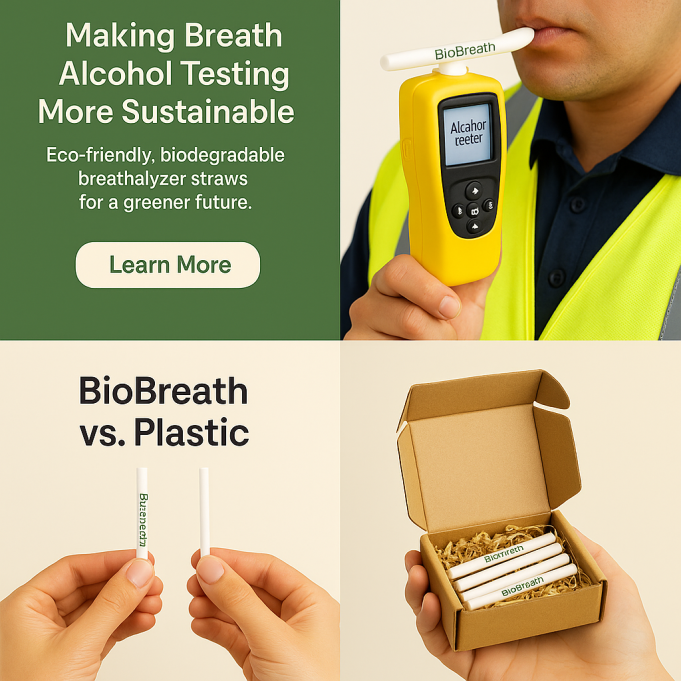
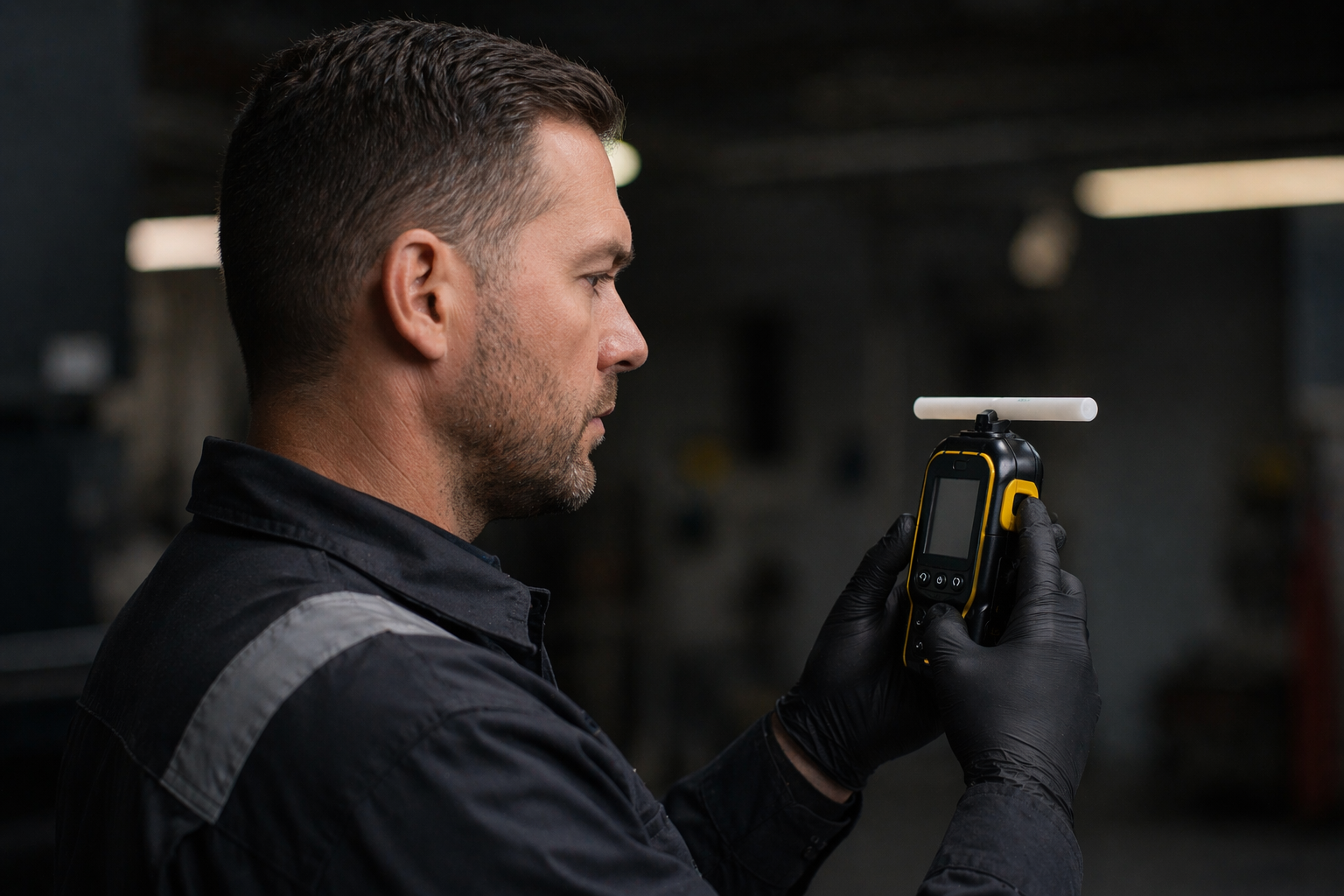
BioBreath is that solution, a biodegradable alternative designed to fit the same devices and follow the same process, so organisations can start reducing this overlooked plastic stream without changing how they operate.
Good Intentions Are Not Enough. Practical Solutions Are.

Sustainability commitments are only as valuable as the actions behind them. For organisations in high-frequency testing environments, the challenge is not motivation, it is finding alternatives that actually work in the real world.

BioBreath is built around that reality. It does not ask organisations to change their devices, retrain their staff, or compromise on testing accuracy. It asks them to swap one consumable for another, and in doing so, remove a meaningful volume of single-use plastic from their operations.

That is not a small ask dressed up as a big one. It is a genuine improvement that is practical enough to actually happen.

 What Switching to BioBreath Actually Changes

01

Plastic eliminated at the source

Every BioBreath straw used is one less single-use plastic consumable entering the waste stream. At scale, across a police force, a mine site, or a transport fleet, that reduction is significant and measurable.

02

Biodegradable by design

BioBreath straws are made from 100% PBS, a material designed to fully degrade within 180 days under industrial composting conditions. In landfill, visible fragments begin breaking down within 2-3 years, compared to 200 years or more for traditional plastic straws.

03

Lower-plastic packaging

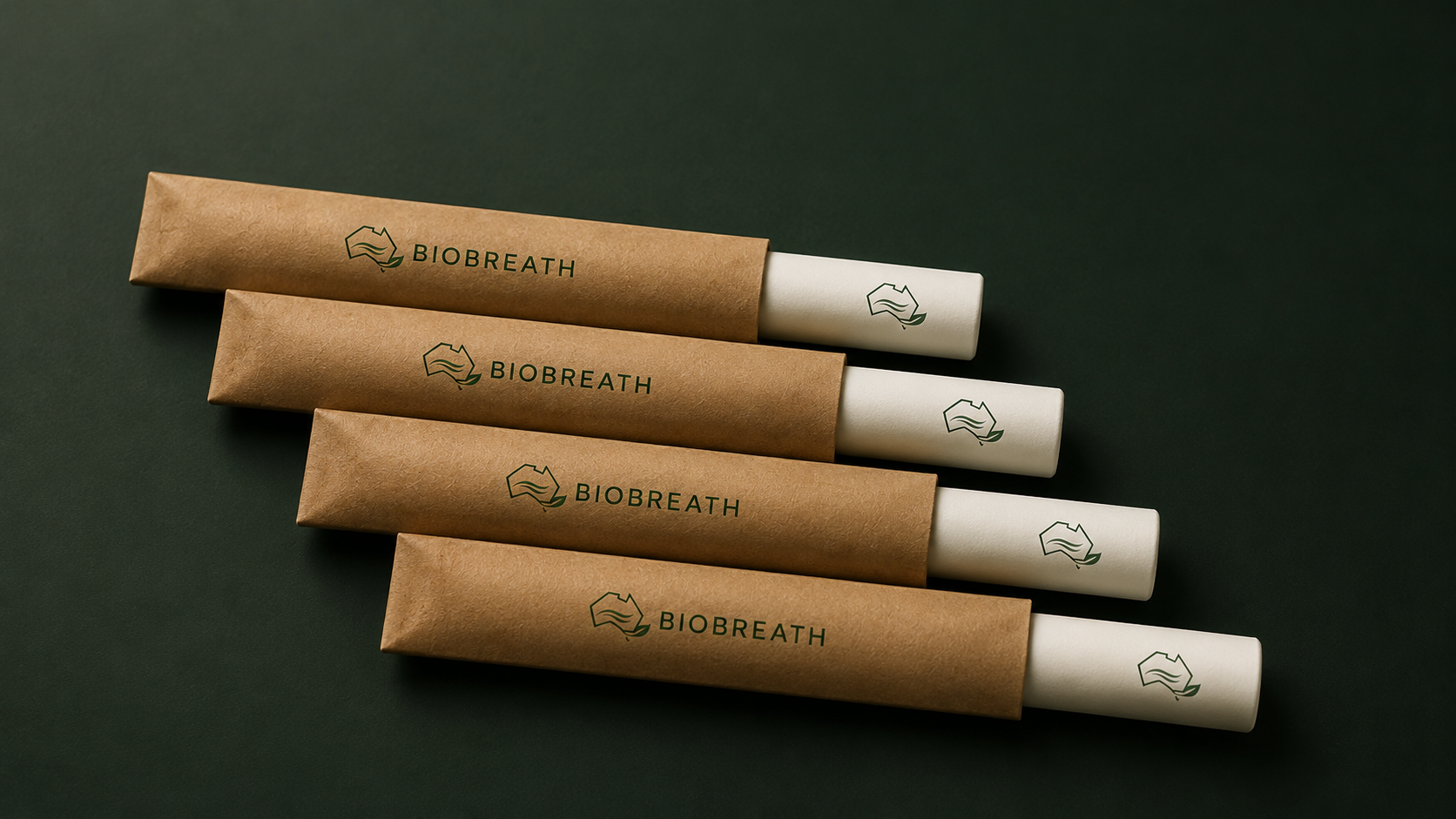
The plastic reduction does not stop at the straw. BioBreath straws are individually paper-sleeved and supplied in cardboard boxes, keeping plastic out of the packaging as well as the product.

04

Supporting organisational sustainability targets

For organisations with ESG commitments, waste reduction targets, or sustainability reporting obligations, BioBreath represents a practical, documentable action, not just an aspiration.

We Will Tell You Exactly What We Can and Cannot Claim

 Material transparency is not just good practice. For procurement decisions in government and industry, it is essential. Here is exactly what BioBreath can say about its materials, and what the evidence behind those claims actually is.
Claim Evidence
We can say BioBreath straws are manufactured from 100% PBS.
Evidence Confirmed by supplier specification documentation.
We can say The material is free from BPA, plasticisers, and heavy metals.
Evidence Confirmed by supplier specification documentation.
We can say The resin is DIN CERTCO-certified compostable, compliant with EN 13432, ASTM D6400, ISO 18606, and ISO 17088.
Evidence DIN CERTCO Registration No. 7W0664, PBS Granulat, valid to May 2030. Compliant with DIN EN 13432, ASTM D6400, ISO 18606, and ISO 17088.
We can say The resin is designed to biodegrade under composting conditions.
Evidence Per material specifications and DIN CERTCO Registration No. 7W0664 scope.
We cannot say That the finished BioBreath straw itself holds independent product-level certification.
Why The DIN CERTCO certification applies to the raw resin, not the finished straw. We are working toward additional product-level validation.

Where BioBreath Fits Into Your Sustainability Strategy

For many organisations, sustainability strategies focus on energy, fleet, and packaging. Operational consumables, especially small routine ones like breath testing straws, rarely make the list.

But for organisations conducting thousands of tests per year, these consumables represent a real and addressable plastic reduction opportunity. One that requires no capital investment, no process change, and no new infrastructure.

BioBreath is relevant to several frameworks that organisations in law enforcement, mining, and industry are already working within.

Framework Alignment — click to explore
Australia's National Plastics Plan Reducing single-use plastics across industry and government.
Relevant
Product Stewardship Act 2011 Shared responsibility for the lifecycle of products and materials.
Relevant
UN Sustainable Development Goal 12 Responsible consumption and production.
Relevant
UN Sustainable Development Goal 13 Climate action and emissions reduction.
Relevant
ESG Reporting Frameworks Documentable, measurable plastic reduction action.
Relevant

BioBreath is relevant to these frameworks but has not been formally assessed or certified against them. These alignments reflect the nature of the product and its intended impact.

740,000 breath test conducted annually in wa alone.

The Sectors Where This Matters Most

BioBreath is most relevant in environments where breath testing is routine and high-volume, because that is where the plastic accumulates fastest and where the reduction opportunity is greatest.

01

Police and law enforcement

Australian police forces conduct millions of breath tests annually. Even partial adoption of BioBreath across state law enforcement would eliminate a significant and currently invisible plastic stream.

High volume opportunity
02

Mining and resources

Site entry and random testing at major resource operations generates consistent, high-volume consumable use. BioBreath offers a practical upgrade that aligns with the ESG commitments increasingly expected of major miners.

ESG aligned
03

Construction and infrastructure

Safety-critical workforces conducting routine compliance testing represent a meaningful and addressable opportunity for plastic reduction across the construction sector.

Safety sector fit
04

Transport and logistics

Fleet operators and transport companies with ongoing alcohol compliance obligations can make a measurable sustainability improvement simply by switching their consumable of choice.

Easy transition